





Let’s create
success together.
Omnichannel Commerce for Connected Sales Channels
Customers today expect cross-channel shopping experiences
The boundaries between online and offline sales are increasingly disappearing.
Customers research online, buy in-store, order via dealer portals, or use marketplaces as an additional sales channel.
For companies, this means a new challenge:
All channels must be connected with each other and be able to access the same information.
This is exactly where omnichannel commerce comes in.
syreta supports companies in intelligently connecting sales channels, systems, and processes and creating a seamless customer journey.
What does Omnichannel Commerce mean?
Omnichannel Commerce describes the seamless integration of all sales and communication channels of a company.
These include, for example:
- Online shops
- Stores
- Field sales
- Marketplaces
- Dealer portals
- Customer service
- Mobile applications
The customer experiences the company as a coherent entity - regardless of which channel they use.
Typical Challenges in Omnichannel Commerce
Many companies have different systems and processes.
This often leads to:
- Different product information
- Varying prices
- Inconsistent inventory levels
- Lack of transparency
- Media discontinuities
- Poor customer experiences
The challenge is to build all channels on a shared data foundation.
Our services in the field of omnichannel commerce
Strategy & Concept
Analysis of existing sales structures and development of an omnichannel roadmap.
System integration
Connection of:
- ERP systems
- Shop systems
- CRM solutions
- PIM systems
- Marketplaces
- POS systems
Central database
Building consistent data structures for:
- Product data
- Prices
- Inventory levels
- Customer data
Process automation
Automation of cross-channel processes.
Examples:
- Orders
- Returns
- Price updates
- Inventory reconciliations
Individual platforms
Development of solutions that intelligently connect existing channels with one another.
A central database as a success factor
Omnichannel only works when all channels access the same information.
This includes, in particular:
Product data
Up-to-date information for all sales channels.
Inventory levels
Transparent availability in real time.
Prices
Consistent pricing structures.
Customer data
A unified view of customers and interactions.
ERP systems as the central foundation
In many companies, the ERP system forms the central source of information.
It manages:
- Items
- Prices
- Stock levels
- Customers
- Orders
Through intelligent integrations, this information is automatically distributed to all connected channels.
Click & Collect, Ship-from-Store and modern processes
Modern omnichannel strategies enable new business models.
Examples:
Click & Collect
Order online, pick up locally.
Ship-from-Store
Shipping directly from the store.
Cross-channel returns
Returns regardless of the original purchase channel.
Unified customer communication
Consistent information across all touchpoints.
Automation as the foundation for scaling
The more sales channels are used, the more important automated processes become.
For example, the following can be automated:
- Data flows
- Order processes
- Price updates
- Product maintenance
- Inventory levels
- Customer communication
This creates efficient and scalable structures.
Why Syreta?
Understanding of commerce and digitalization
We look not only at individual channels, but at the entire sales landscape.
Experience with integration projects
ERP, CRM, PIM, shop systems and custom applications are connected into an overall solution.
Focus on processes
Technology serves to optimize workflows and customer experiences.
Automation at the center
Our goal is end-to-end and efficient processes.
Custom solutions
We develop concepts that adapt to existing structures.
Frequently Asked Questions
What is the difference between multichannel and omnichannel?


Multichannel means multiple sales channels. Omnichannel connects these channels into a seamless customer experience.
Do we need an online shop for omnichannel commerce?
Not necessarily. What matters is the networking of the existing sales channels.
Which systems need to be integrated?
Typically ERP, CRM, PIM, shop systems, POS systems and marketplaces.
Is omnichannel only useful for large companies?
No. Mid-sized companies also benefit from consistent processes and a centralized database.
What role does the ERP system play?
The ERP often forms the central data source for prices, inventories, customers, and orders.
Can existing systems continue to be used?
Yes. In many cases, existing systems are integrated and extended rather than replaced.
What are the benefits of omnichannel commerce?
Better customer experiences, more efficient processes, greater transparency, and better scalability.
How does an omnichannel project begin?
With the analysis of existing channels, systems and processes, as well as the development of a clear strategy.
Intelligently connect sales channels
Omnichannel Commerce creates the foundation for consistent customer experiences, efficient processes, and sustainable growth.
With syreta, you gain a partner that connects systems, data, and sales channels into an end-to-end solution.
Case Studies
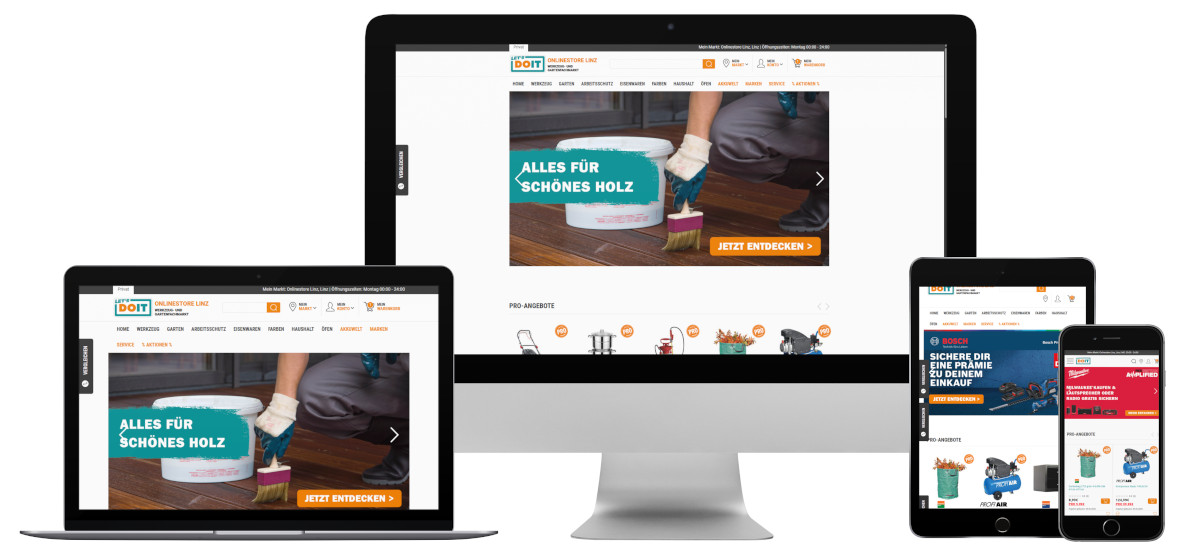
Case Study: LET'S DOIT
syreta developed a central omnichannel platform for LET'S DOIT to connect the online shop, stores, the customer loyalty card app, consultation terminals, and marketplaces. By integrating SAP, BMD, and MDS, prices, inventory levels, and product data are automatically synchronized and made available across all channels.
mehr lesen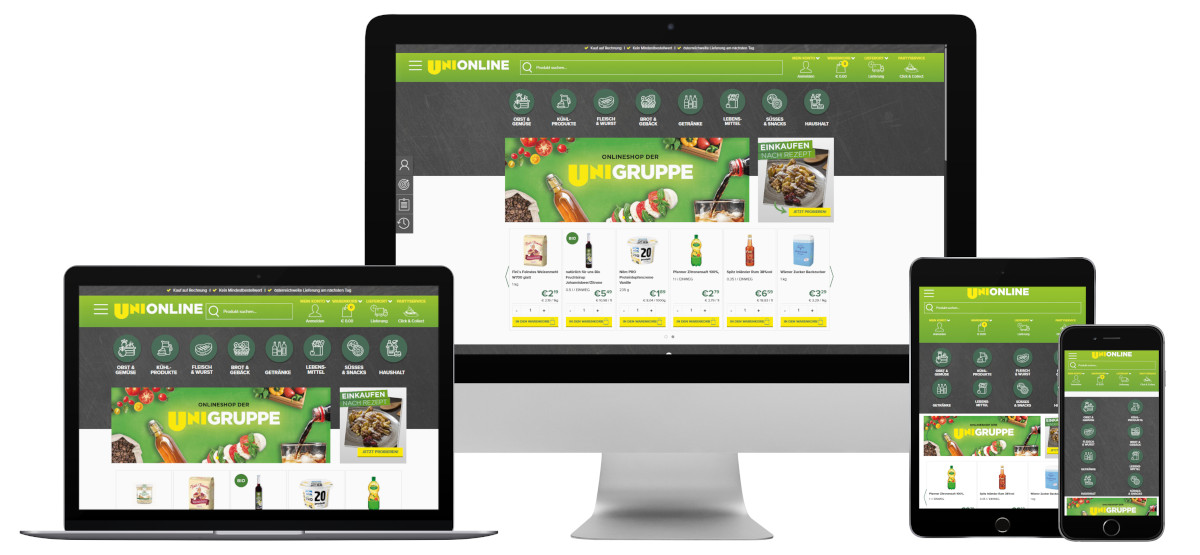
Case Study: Unimarkt
Together with syreta, UNIMARKT implemented a comprehensive omnichannel solution for brick-and-mortar and digital grocery retail. Prices, inventory levels, orders, and customer cards are synchronized automatically and made available via the webshop, stores, click & collect, and delivery services such as Lieferando and mjam.
mehr lesen