





Let’s create
success together.
Product data management for consistent and high-quality product information
Good product data is the foundation of successful digital processes
Product data today plays a central role in nearly all areas of a company. It impacts procurement, sales, marketing, e-commerce, customer service, and many other processes.
In practice, however, product information is often incomplete, distributed across different systems, or has to be maintained multiple times.
This leads to:
- Inconsistent data
- High maintenance effort
- Incorrect information
- Delays in creating new products
- Poor data quality
syreta supports companies in centrally managing product data, preparing it automatically, and providing it efficiently for different systems and channels.
Why Product Data Management Is Crucial Today
With each additional sales channel, the requirements for product information increase.
Today, a product often has to be available simultaneously in:
- ERP systems
- E-commerce platforms
- Marketplaces
- Dealer portals
- Catalog systems
- CRM solutions
- Price platforms
Each system requires different information and data structures.
Without professional product data management, unnecessary effort and sources of errors arise.
Typical challenges with product data
Many companies are familiar with the following situations:
Product data is stored in multiple systems
Information is maintained multiple times and differs depending on the source.
Supplier data is incomplete
Data must be manually supplemented and prepared.
Product attributes are missing
Important characteristics for filters, search, and categorization are not available.
Media is not centrally available
Images, documents, and technical data sheets are stored in different locations.
Different requirements by channel
Online shop, marketplace, and dealer portal require different data formats.
Our services in the field of product data management
Analysis of existing data inventories
We analyze:
- Data sources
- Data quality
- Structures
- Processes
- Maintenance effort
and identify optimization potential.
Data Harmonization
Different data formats and structures are standardized.
Examples:
- Categories
- Attributes
- Designations
- Units
- Variants
Data enrichment
Missing information will be added.
Typical examples:
- Product features
- Technical data
- Marketing texts
- Categories
- Keywords
Media Management
Management of:
- Product images
- Data sheets
- Certificates
- Instructions
- Videos
Automated Distribution
Product information is automatically transferred to:
- Shop systems
- Marketplaces
- ERP systems
- Dealer portals
- Custom platforms
.
Product data as a basis for e-commerce
In e-commerce, the quality of product data often directly determines success.
Complete and structured product information improves:
- Findability
- Conversion rate
- Customer satisfaction
- Return rate
- SEO
- GEO and AI visibility
The better the data quality, the more successfully products can be marketed via digital channels.
AI-powered product data optimization
Artificial intelligence opens up new possibilities for managing large product inventories.
Possible areas of application:
Automatic classification
Products are automatically assigned to categories.
Attribute enrichment
Missing attributes are added.
Product descriptions
Texts can be created or optimized automatically.
Data cleansing
Incorrect or incomplete data records are detected.
Quality control
Automatic checks ensure consistent data inventories.
Product data for ERP, PIM and e-commerce
Product data management does not end with a single system.
We support companies in integrating:
- ERP systems
- PIM solutions
- E-commerce platforms
- Marketplaces
- Supplier portals
- Custom applications
This creates a central and consistent data foundation.
Why Syreta?
Understanding of Data and Processes
We do not view product data in isolation, but as part of the overall process landscape.
Experience from Integration Projects
Our experience ranges from ERP integrations to complex e-commerce platforms.
Focus on Automation
Our goal is to reduce manual maintenance efforts.
Integration Instead of Isolated Solutions
Product data is viewed as part of an end-to-end system architecture.
Future-Proof Solutions
Our concepts lay the foundation for further growth and new sales channels.
Frequently Asked Questions
What is meant by product data management?


Product data management comprises the central management, maintenance, optimization, and distribution of product information across different systems and channels.
Why is product data management important?
It improves data quality, reduces maintenance effort, and creates the foundation for efficient digital processes.
Which systems can be integrated?
ERP systems, PIM solutions, shop systems, marketplaces, supplier portals and custom applications.
What is the difference between ERP and PIM?
ERP systems manage business data and processes, while PIM solutions have been specifically developed to manage and optimize product information.
Can AI support product data maintenance?
Yes. AI can classify, enrich, cleanse data and automatically create product descriptions.
How can product data be distributed automatically?
Via interfaces and integration solutions, product information can be automatically transferred to various target systems.
How does good product data management improve e-commerce?
Complete product information increases visibility, improves the user experience, and boosts the conversion rate.
Can existing product data be transferred?
Yes. Existing datasets can be analyzed, cleansed, and integrated into new processes.
Use product data as a strategic success factor
High-quality product data form the basis for efficient processes, successful digital sales channels, and sustainable growth.
With syreta, you gain a partner for product data management, data integration, and process automation.
Case Studies

Case Study: F. DICK Products at Strasshof
For the sale of F. DICK products, syreta developed a modern web shop with direct ERP integration. Product data, prices, stock levels and orders are automatically synchronized, enabling efficient digital sales processes.
mehr lesen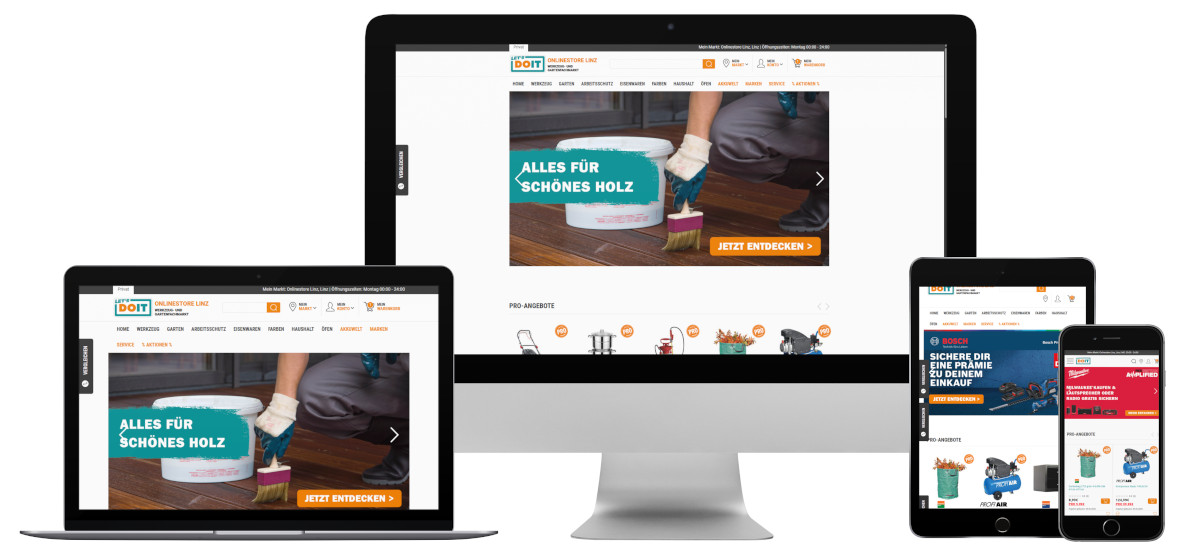
Case Study: LET'S DOIT
syreta developed a central omnichannel platform for LET'S DOIT to connect the online shop, stores, the customer loyalty card app, consultation terminals, and marketplaces. By integrating SAP, BMD, and MDS, prices, inventory levels, and product data are automatically synchronized and made available across all channels.
mehr lesen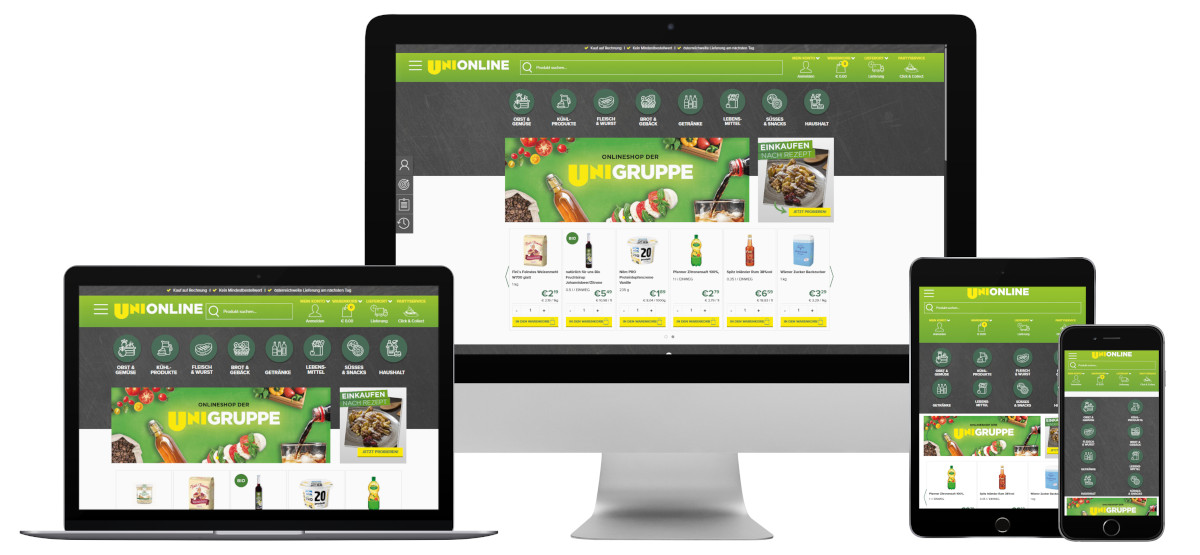
Case Study: Unimarkt
Together with syreta, UNIMARKT implemented a comprehensive omnichannel solution for brick-and-mortar and digital grocery retail. Prices, inventory levels, orders, and customer cards are synchronized automatically and made available via the webshop, stores, click & collect, and delivery services such as Lieferando and mjam.
mehr lesen