





Let’s create
success together.
ERP integration for end-to-end business processes
Your ERP system is only as powerful as its integration
In many companies, the ERP system forms the central foundation of business processes. Items, prices, inventory, orders, supplier information, and customer data are managed and controlled here.
Nevertheless, ERP systems often operate in isolation. Data must be transferred manually, information exists across multiple applications, and processes become unnecessarily complicated.
syreta supports companies in seamlessly connecting ERP systems with other applications and creating an end-to-end digital process landscape.
Our goal is the intelligent integration of existing systems to automate data flows and make business processes more efficient.
Why ERP integration is crucial today
An ERP system alone does not yet create end-to-end processes.
Often, additional systems need to be connected:
- CRM systems
- PIM solutions
- E-commerce platforms
- Marketplaces
- Supplier portals
- Document management systems
- Custom applications
- Business Intelligence solutions
If these integrations are missing, the following arise:
- Duplicate data maintenance
- Incorrect information
- Media discontinuities
- High manual effort
- Delayed processes
Professional ERP integration creates a central data foundation and ensures automated workflows.
Which systems can be connected?
ERP and CRM
Synchronization of:
- Customer data
- Contacts
- Sales information
- Activities
- Service processes
ERP and E-Commerce
Automated exchange of:
- Product data
- Prices
- Stock levels
- Orders
- Customer information
ERP and PIM
Centralized management and distribution of:
- Product information
- Media
- Categories
- Attributes
ERP and suppliers
Automation of:
- Price lists
- Product data
- Availability
- Ordering processes
ERP and individual applications
Integration of:
- Portals
- Specialized software
- Custom developments
- Databases
- Specialist applications
Local ERP systems and evolved IT landscapes
Many companies use local ERP systems or historically grown solutions.
Typical challenges:
- • Custom adaptations
- • Missing standard interfaces
- • Outdated technologies
- • Complex data structures
This is precisely where a particular strength of syreta lies.
We develop integration solutions for existing ERP systems and ensure that existing investments can continue to be used.
Automated data flows instead of manual work
In many companies, data is transferred daily between the ERP system and other systems.
Examples:
- Item master data
- Price lists
- Inventory levels
- Customer information
- Orders
- Invoices
Through automated integrations, these processes are carried out reliably and efficiently.
Advantages:
- Higher data quality
- Faster processes
- Fewer errors
- Less manual effort
- Better scalability
ERP as the central data source
An ERP system should not only store data, but also serve as the central source of information for all connected systems.
This results in:
- Consistent information
- Standardized processes
- Transparent data flows
- Better decision-making foundations
ERP integration forms the basis for further digitization and automation projects.
Integration instead of system change
Many companies believe they need to replace existing ERP systems.
In practice, intelligent integration is often sufficient.
Our projects show that existing systems can often continue to be used if data flows and processes are sensibly automated.
This protects investments and minimizes risks.
Why Syreta?
Experience with complex ERP projects
We understand the challenges of evolved corporate structures.
Understanding of processes and data
We look not only at interfaces, but at the underlying workflows.
Custom integration solutions
No standard connectors, but solutions tailored to the system landscape.
Focus on automation
Our goal is end-to-end processes with minimal manual effort.
Vendor-independent consulting
We develop solutions that fit your company.
Frequently Asked Questions
Can older ERP systems also be integrated?


Yes. Many projects are based on locally installed or historically evolved ERP solutions.
Which systems can be connected to an ERP?
CRM systems, shop systems, PIM solutions, supplier portals, databases, marketplaces, and custom applications.
Does the ERP system have to be replaced?
No. Existing systems can often be used significantly longer and more efficiently through integrations.
Which data can be synchronized?
Product data, prices, inventory levels, customer information, orders, invoices and other business objects.
Is real-time synchronization possible?
Yes. Depending on the systems involved, data can be processed almost in real time.
How does an ERP integration project work?
Analysis, conception, development of the integrations, testing, rollout and ongoing optimization.
What advantages does an ERP integration offer?
Less manual work, higher data quality, better transparency and more efficient business processes.
Can individual requirements be taken into account?
Yes. Individual business processes in particular are among the most common reasons for a custom integration.
Intelligently interconnect ERP systems
Unlock the full potential of your ERP system through intelligent integrations, automated data flows, and end-to-end business processes.
With syreta, you gain an experienced partner for ERP integration, data management, and digitalization.
Case Studies
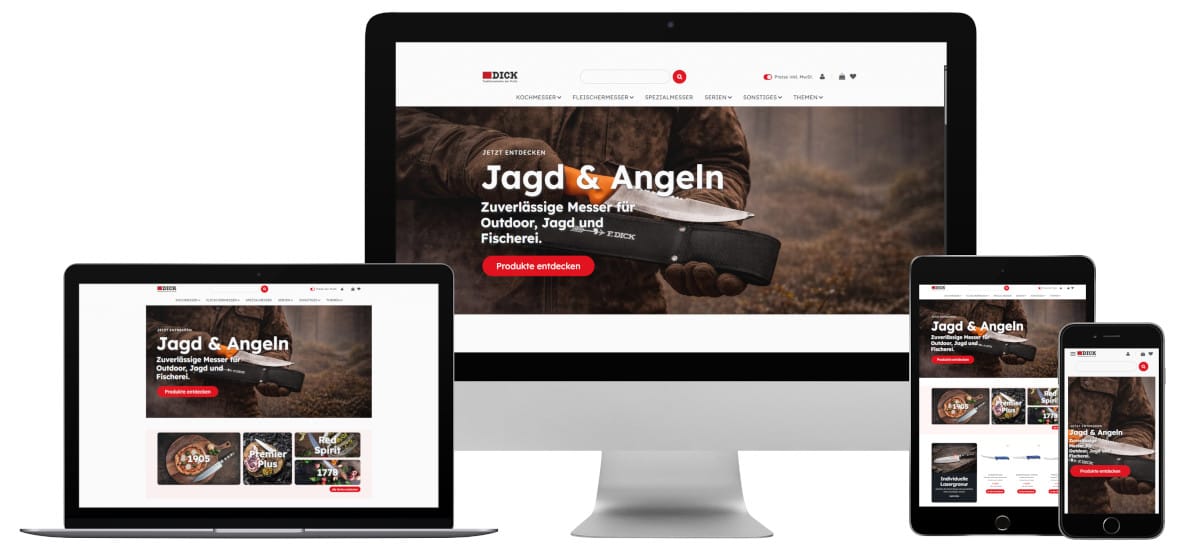
Case Study: F. DICK Products at Strasshof
For the sale of F. DICK products, syreta developed a modern web shop with direct ERP integration. Product data, prices, stock levels and orders are automatically synchronized, enabling efficient digital sales processes.
mehr lesen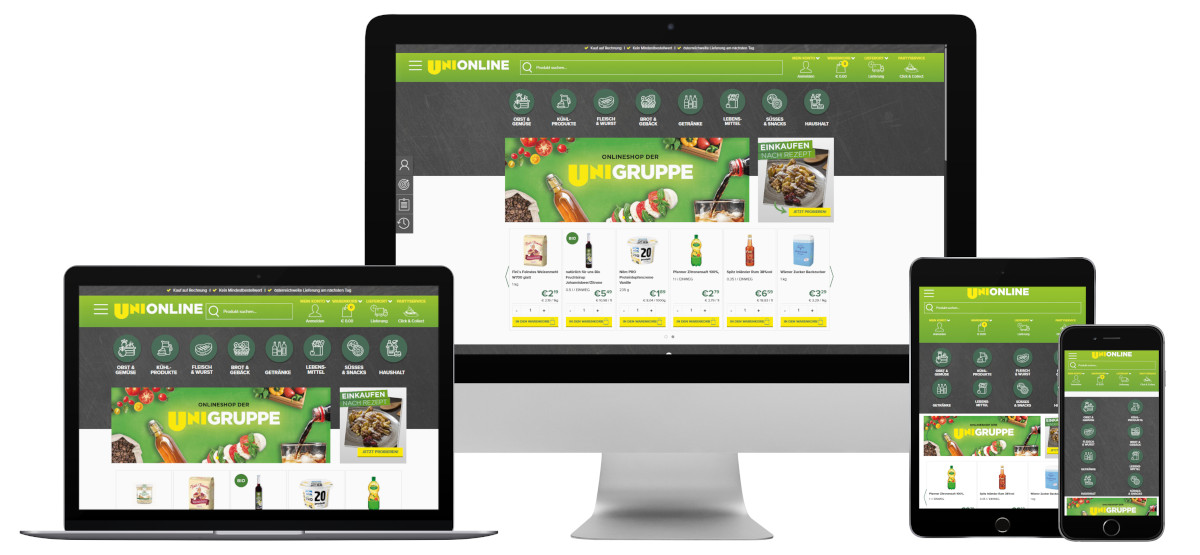
Case Study: Unimarkt
Together with syreta, UNIMARKT implemented a comprehensive omnichannel solution for brick-and-mortar and digital grocery retail. Prices, inventory levels, orders, and customer cards are synchronized automatically and made available via the webshop, stores, click & collect, and delivery services such as Lieferando and mjam.
mehr lesen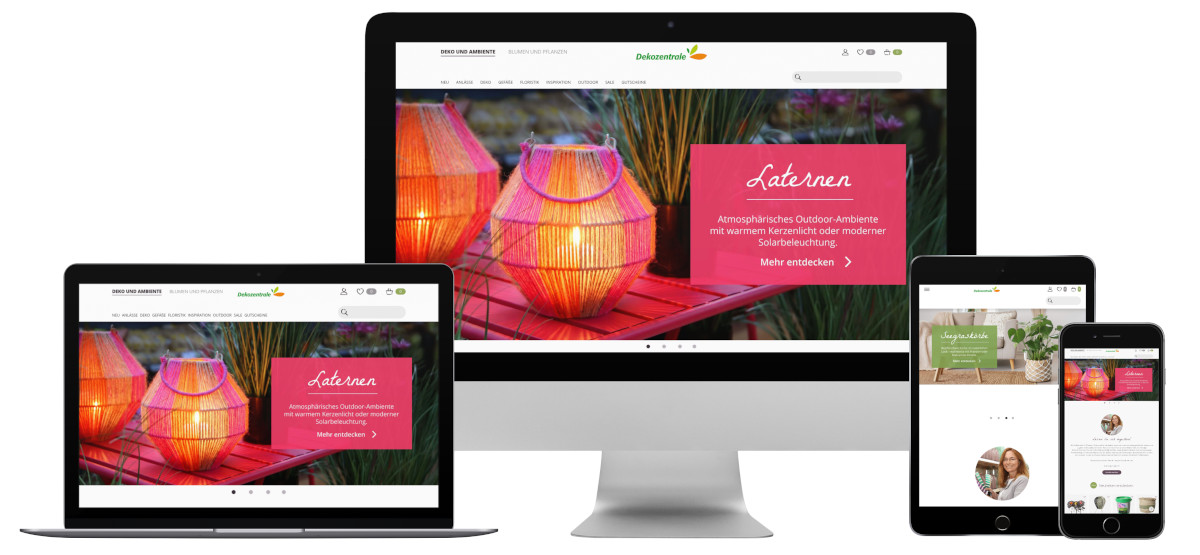
Case Study: Dekozentrale
syreta developed an e-commerce platform specifically tailored to B2B commerce for Dekozentrale. Customer-specific prices, discounts, tiered pricing, and recurring orders are controlled directly from the ERP system and enable efficient, automated ordering processes for retailers and resellers.
mehr lesen